

Enjoying the sea more responsibly doesn’t have to mean changing your habits completely.
More often than not, it’s the small things that make the difference: choosing your anchorage a little more carefully, bringing your waste back to shore, or slowing down when dolphins appear nearby.
Whether you’re renting a boat for a few hours or setting off on a week-long sailing holiday aboard your own boat, these 8 simple habits can help you enjoy the sea while looking after it too.
1. Reduce waste before you even step on board
Between water bottles, picnic supplies, snacks and all the things we pack “just in case”, it’s easy to bring far more than we actually need. And sooner or later, all of it has to end up somewhere.
One of the simplest ways to cut down on waste is to think about it before you leave the marina. A reusable water bottle, a few reusable containers and a little less packaging can already make a noticeable difference.
A small change before you set off can make a surprisingly big difference by the time you return.
If you’d like to go a step further, take a look at our tips for renting a boat responsibly before your trip.
2. Sort your waste and bring it back to shore
Between 70% and 85% of the waste found at sea is plastic. It’s one of the many reasons we’ve chosen to support the Fondation de la Mer.
Even with the best intentions, waste builds up surprisingly quickly on board. Food packaging, cans, tissues, cigarette butts… There’s often more than you realise by the end of the day.
Keep a few bags on board to separate waste and hold onto everything until you’re back ashore.
The same goes for food waste. A banana peel, a crust of bread or leftover food might seem harmless, but organic waste can still affect natural ecosystems and disturb marine wildlife.
A simple rule to remember: if you bring it on board, take it back with you.
3. Choose products that are kinder to marine environments
A day on the water without sunscreen? Most of us know someone who’s tried it. They usually regret it pretty quickly.
Some sunscreens contain ingredients that can affect marine ecosystems. When possible, choose a reef-friendly or marine-friendly option and apply it well before swimming so it has time to absorb properly into your skin.
And it’s not just sunscreen. Soaps, dishwashing liquids and cleaning products used on board can also find their way into the water, directly or indirectly. Choosing biodegradable products or those carrying recognised environmental certifications is a simple habit worth adopting.
Often, a quick glance at the label is all it takes to make a better choice.
4. Anchor on sand rather than seagrass
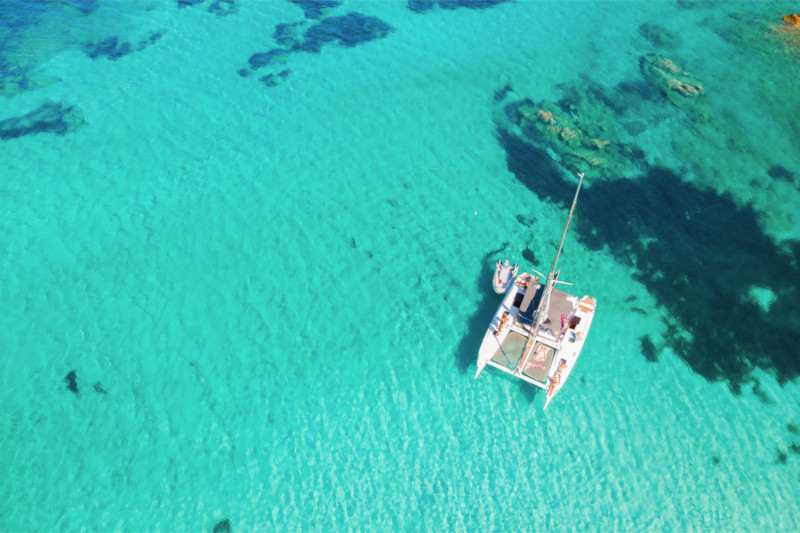
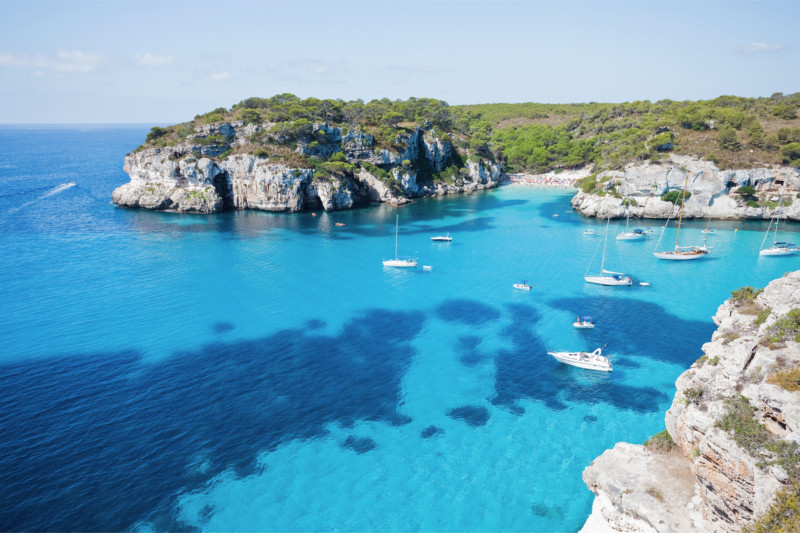
The water is crystal clear, the anchorage looks perfect… But beneath the surface there may be a much more fragile ecosystem than you realise.
Many Mediterranean coves are home to Posidonia seagrass meadows. These underwater habitats provide shelter for countless species and play an important role in keeping the sea healthy. Invisible from the deck of a boat, they’re also particularly vulnerable to anchors that drag through them or tear them up.
Choose sandy seabeds and use mooring buoys when they’re available. Apps such as Donia and Nav&Co make it easy to check what’s beneath you before dropping anchor.
To better understand the impact of poor anchoring practices, discover what happens underwater when you anchor in the wrong place.
5. Respect marine wildlife
Spotting dolphins or a sea turtle is often one of the highlights of a day at sea.
As tempting as it may be, try not to move closer or change course to follow them. Giving wildlife plenty of space allows animals to carry on with their natural behaviour without unnecessary disturbance.
Speed matters too. The faster you travel, the greater the risk of collisions and underwater noise, which can affect species that rely on sound to communicate, navigate and find food.
Sometimes, slowing down a little is the best way to enjoy the moment.
6. Reduce your fuel consumption
Taking things a little more slowly often makes for a better day on the water.
Keeping your speed down, switching off the engine when you don’t need it and avoiding unnecessary idling are all simple ways to reduce your impact.
When you’re at anchor, a few minutes with the engine off benefits everyone: your fuel consumption, your wallet and the peace and quiet around you.
And when it’s time to refuel, take your time. Even small fuel spills can have significant consequences for marine environments.
7. Use water responsibly on board
At home, it’s easy to turn on a tap without thinking twice. At sea, things are a little different.
On board, every drop counts, particularly on longer trips. Taking shorter showers, turning off the tap while soaping up and avoiding unnecessary water use are all simple ways to save water.
During stopovers, make use of marina facilities whenever possible, including showers, toilets, pump-out stations and designated cleaning areas. These facilities are designed to manage wastewater properly before it returns to the environment.
8. Leave beaches and anchorages cleaner than you found them
A food wrapper wedged between rocks, a bottle left behind on the beach or a piece of litter drifting past the boat… Unfortunately, it’s something many of us still come across.
Without turning your day out into a full-scale beach clean, picking up a piece of rubbish along the way is already a small win for the places you’ve come to enjoy. And if everyone leaves with one extra piece of litter, the impact soon adds up.
After all, the best anchorages are often the ones that look exactly as they did when we arrived.
Small habits that make a big difference
The sea gives us far more than just somewhere to go: a hidden cove around the coastline, a sunset at anchor, or that feeling of freedom that’s hard to find anywhere else. A few simple habits can help preserve these moments and the places that make them possible.
That’s also the thinking behind our partnership with the Fondation de la Mer, which every booking made through SamBoat helps support.
All that’s left is to book your boat on SamBoat and start looking forward to your next day on the water.
FAQ
How can I reduce my environmental impact when boating?
Simple actions can make a real difference: reducing waste on board, choosing biodegradable products, respecting marine wildlife, anchoring on sandy seabeds and reducing fuel consumption.
Why should I avoid anchoring on Posidonia seagrass?
Posidonia seagrass meadows play a vital role in Mediterranean biodiversity. Anchors can cause lasting damage, while the seagrass can take decades to recover.
Can I throw organic waste into the sea?
Even biodegradable waste such as fruit peelings or leftover food can disrupt natural ecosystems and affect marine wildlife. It’s best to keep it on board and dispose of it ashore.
What type of sunscreen should I use when boating?
Where possible, choose marine-friendly or reef-friendly sunscreens designed to minimise their impact on marine ecosystems. It’s also a good idea to apply sunscreen well before swimming so it has time to absorb properly into the skin.